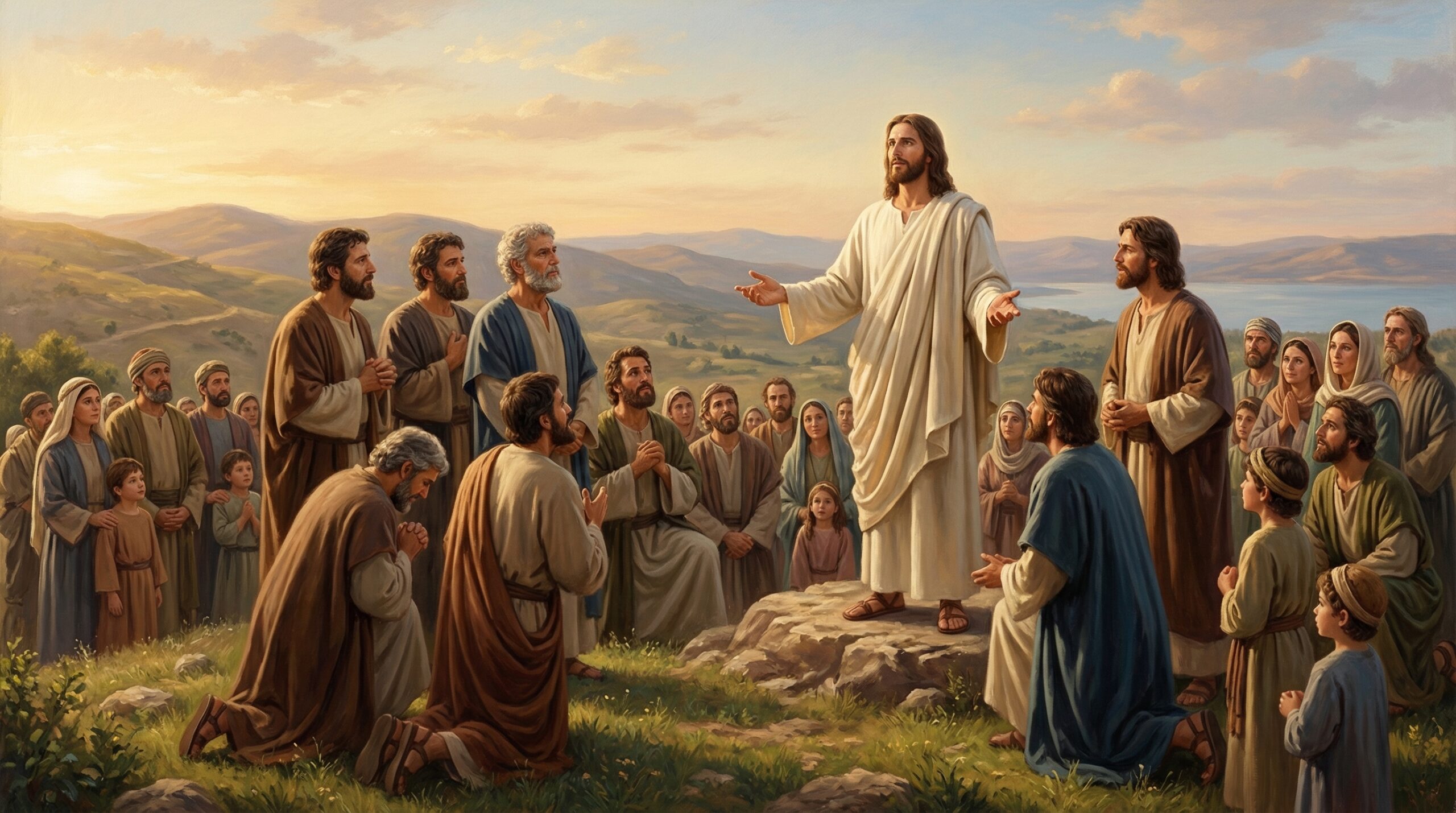
Welcome back, friends. Today we’re diving into a question that sits at the heart of Catholic life and often raises confusion: If Christ is the one mediator between God and man, why does God still work through human beings? And more importantly—what does Scripture actually say?
Let’s begin with the anchor point. St. Paul writes clearly in 1 Timothy 2:5:
“For there is one God, and there is one mediator between God and mankind, the man Christ Jesus.”
This is non-negotiable. Christ alone bridges the gap between God and humanity. Only His sacrifice saves. Only His divine-human nature reconciles us to the Father.
But here’s where many people stop—and where Scripture keeps going.
Because throughout the Bible, God consistently chooses to work through human instruments. Not as competitors to Christ, but as participants in His work.
Look at Abraham.
In Genesis 18:23–32, Abraham boldly approaches God:
“Will you indeed sweep away the righteous with the wicked?”
And he keeps going—pleading, bargaining, interceding.
Finally, God responds: “For the sake of ten I will not destroy it.”
This is remarkable. Abraham is not replacing God’s authority. He’s not equal to God. But God allows him to intercede—to participate in divine mercy.
The New Testament affirms this relationship. James writes in James 2:23:
“Abraham believed God… and he was called a friend of God.”
A friend speaks. A friend intercedes. A friend is heard.
Now fast forward to Christ.
During His earthly ministry, Jesus begins the work of salvation—and yet, He immediately involves others.
In John 3:22, we read:
“Jesus and his disciples went into the Judean countryside… and baptized.”
At first glance, it sounds like Jesus Himself is baptizing. But Scripture gives us an important clarification just one chapter later.
In John 4:2, it says:
“—although it was not Jesus himself but his disciples who baptized—.”
Did you catch that?
Jesus delegates the act of baptism to His disciples.
Why would the one mediator do this?
Because from the very beginning, Christ’s mission is not solitary—it is shared. He empowers others to act under His authority.
And this pattern doesn’t stop after the Resurrection—it explodes.
On Pentecost, Peter preaches, and in Acts 2:41 we hear:
“Those who welcomed his message were baptized, and that day about three thousand persons were added.”
Not Jesus physically baptizing—but His apostles, acting in His name.
In Samaria, Acts 8:12 says:
“They were baptized, both men and women.”
In Ephesus, Acts 19:5:
“They were baptized in the name of the Lord Jesus.”
And when the Holy Spirit falls on the Gentiles, Peter says in Acts 10:47:
“Can anyone withhold the water for baptizing these people…?”
Over and over again, God acts through human hands.
So what does this mean for us today?
It means that Christ’s role as the one mediator is not diminished when He works through others—it is extended.
When a priest absolves sins, it is Christ who forgives.
When someone intercedes in prayer, it is Christ who hears.
When the Church baptizes, it is Christ who cleanses.
This is what the Church means by acting in persona Christi—in the person of Christ.
God doesn’t need us. But He chooses to involve us.
And that should change how we see our lives.
Your prayers matter.
Your intercession matters.
Your witness matters.
Because in Christ, you are not just a spectator—you are a participant in His saving work.
So the next time you hear, “Christ is the only mediator,” say amen.
And then remember:
He is the mediator who invites you to share in His mission.
And that, friends, is not a contradiction—it’s a calling.